Sustainable Textile Manufacturing: The Future of Textiles
The textile industry is undergoing one of its most significant transformations in decades. Increasing pressure to reduce environmental impact, improve resource efficiency, and create more responsible supply chains is changing how textiles are designed, produced, used, and recovered.
However, sustainable textiles are not created simply by replacing conventional fibers with recycled or bio-based alternatives. The real challenge lies in manufacturing materials that maintain the performance, reliability, appearance, and cost requirements expected by modern industries while reducing their environmental footprint.
For textile manufacturers, sustainability has become a complex engineering challenge involving raw materials, production processes, chemical treatments, energy consumption, waste management, and product lifecycle considerations.
The future of sustainable textiles will depend on combining material innovation with advanced manufacturing technologies, process optimization, surface engineering, and circular production strategies.
This article explores the key manufacturing challenges shaping sustainable textiles and the technologies helping the industry move toward more efficient and responsible production systems.
Why Sustainable Textile Manufacturing Is Becoming a Priority
Traditional textile production relies heavily on resource-intensive processes. Fiber production, dyeing, finishing, washing, and chemical treatments can require significant amounts of water, energy, and raw materials.
According to the European Environment Agency, textile production has a substantial environmental footprint due to resource consumption, greenhouse gas emissions, chemical use, and waste generation. The increasing volume of textile consumption has made improving production efficiency a major industry priority.
Sustainability requirements are also changing across the value chain.
Brands are introducing environmental targets, customers are demanding greater transparency, and governments are developing regulations focused on waste reduction, recycled content, chemical management, and product traceability.
For manufacturers, this creates a new challenge:
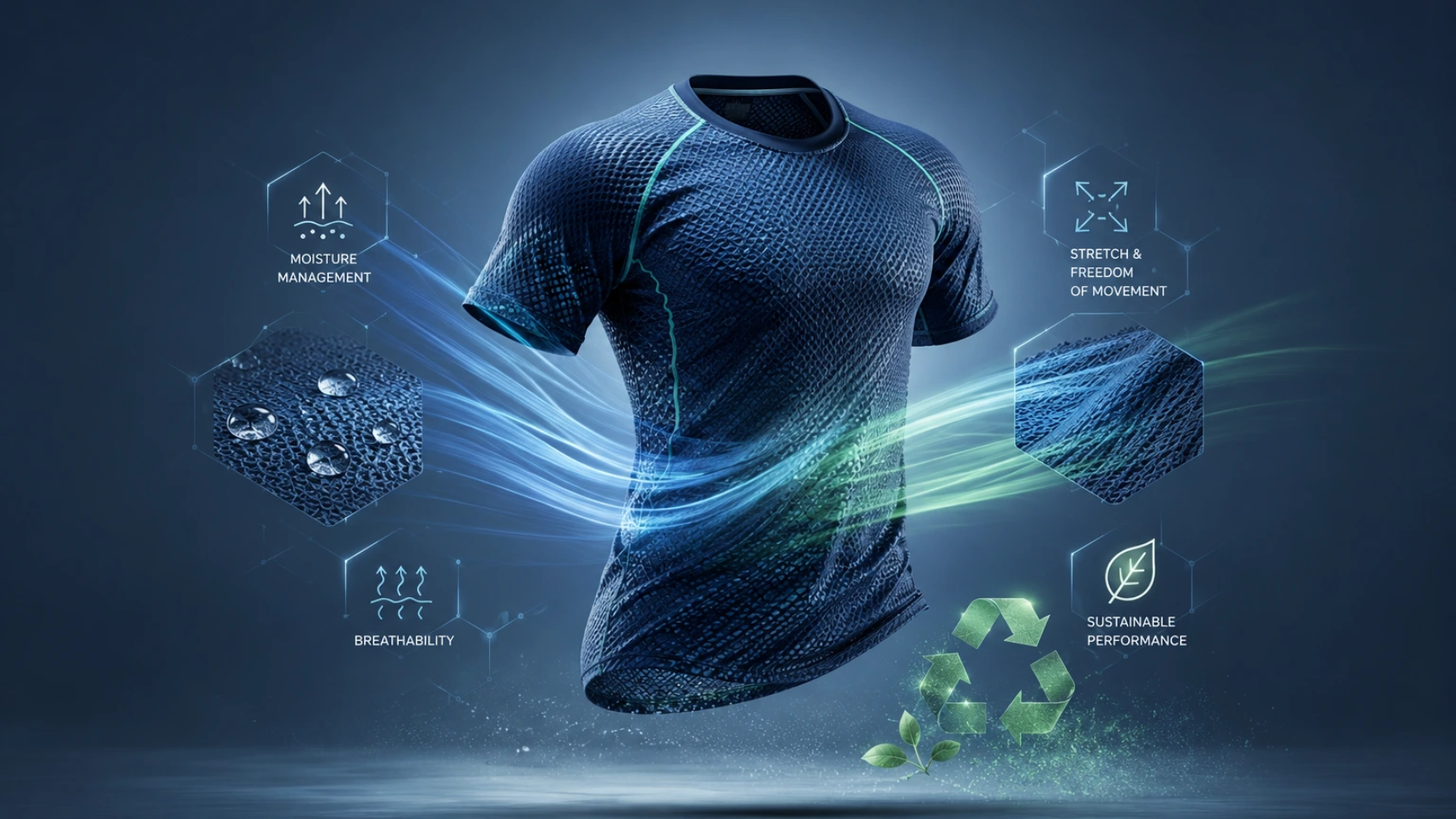
Producing sustainable textiles is not only about selecting greener materials. It requires redesigning manufacturing systems to achieve environmental improvements without compromising product performance.
A sustainable textile must still meet practical requirements such as:
- Mechanical durability
- Color stability
- Comfort
- Chemical resistance
- Processability
- Appearance consistency
- Cost competitiveness
The challenge is balancing environmental goals with industrial performance.
The Performance Challenges of Sustainable Textiles
One of the biggest challenges in sustainable textile manufacturing is maintaining product performance while changing the materials and processes used.
Conventional textile production has been optimized over decades. Fiber selection, spinning methods, weaving structures, dyeing processes, and finishing technologies have been developed to deliver predictable results.
When manufacturers introduce recycled or alternative materials, these established relationships can change.
Maintaining Quality with Recycled Fibers
Recycled fibers offer an important pathway toward reducing dependence on virgin raw materials.
Recycled polyester, recycled nylon, and regenerated cellulose fibers are increasingly used in textile applications. However, recycled materials often introduce additional manufacturing challenges.
Recovered fibers may have:
- Different fiber lengths
- Variable mechanical properties
- Different surface characteristics
- Contamination risks
- Greater batch-to-batch variation
These differences can affect:
- Tensile strength
- Fabric uniformity
- Dye absorption
- Surface appearance
- Processing stability
For manufacturers, the challenge is not only increasing recycled content but ensuring that recycled materials can consistently perform in industrial production environments.
A product containing recycled material that fails durability or quality requirements may create additional waste rather than reducing environmental impact.
The Complexity of Recycled Textile Materials
Recycling textiles is technically more complicated than recycling many other materials.
Many textile products are composed of multiple components:
- Different fiber types
- Coatings
- Adhesives
- Dyes
- Finishes
- Elastomers
- Composite structures
A polyester-cotton blend, for example, combines materials with different chemical structures and recycling requirements.
Separating these materials after use can be difficult, which limits the efficiency of textile recovery systems.
The Challenge of Textile Blends
Blended fabrics are popular because they combine different performance advantages.
A polyester blend may improve durability and wrinkle resistance. Cotton blends may improve comfort and moisture management. Elastane improves stretch performance.
However, these same advantages create recycling challenges.
Future sustainable textile production will require greater consideration of:
- Material compatibility
- Fiber separation
- Chemical recycling methods
- Mechanical recycling limitations
- Product design for recovery
This has increased interest in mono-material textile designs, where products are created using fewer material types to simplify future recycling.
However, mono-material design is not always suitable for every application. Manufacturers must still meet performance, durability, comfort, and cost requirements.
Reducing the Environmental Impact of Textile Production
Sustainable textile manufacturing requires improvements across the entire production process.
The environmental impact of textiles is not determined only by the fiber source. Processing methods often have a major influence on the final footprint.
Key manufacturing areas include:
Water Consumption
Dyeing and finishing processes can require significant water usage.
Reducing water consumption requires technologies such as:
- Low-water dyeing methods
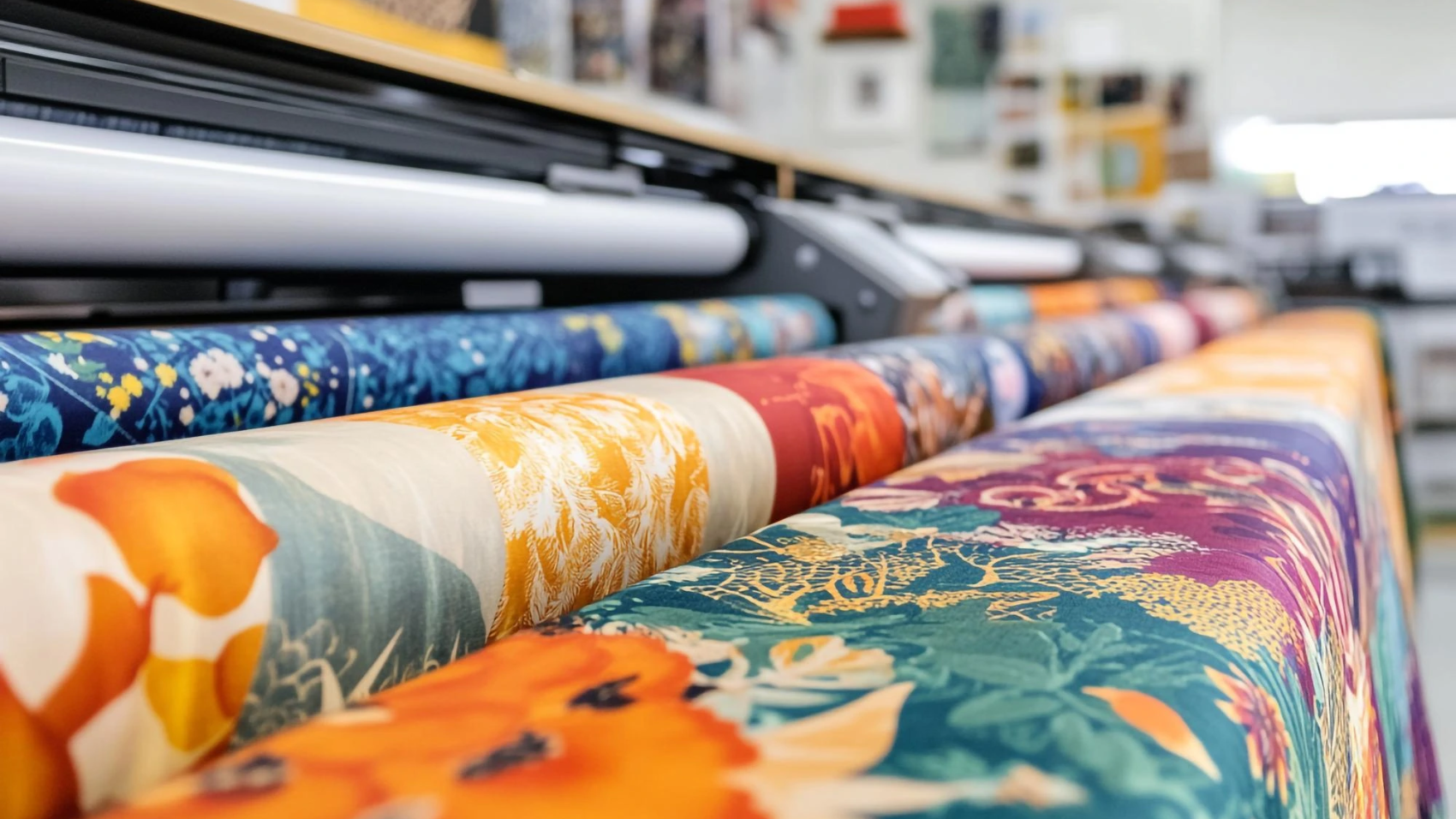
- Digital printing
- Improved chemical application
- Water recycling systems
- Process optimization
The challenge is maintaining color quality and durability while reducing resource consumption.
Chemical Management
Textile finishing processes often rely on chemicals to achieve properties such as:
- Water repellency
- Flame resistance
- Softness
- Antimicrobial performance
- Stain resistance
Sustainable manufacturing requires reducing harmful substances while maintaining functional performance.
This creates a technical challenge because many performance characteristics traditionally depend on chemical treatments.
Energy Efficiency
Manufacturing equipment, drying systems, heating processes, and finishing operations contribute significantly to textile energy consumption.
Improving efficiency can involve:
- Modern production equipment
- Heat recovery systems
- Process automation
- Optimized production parameters
Energy reduction must be achieved without reducing production speed or product quality.
Surface Engineering: Improving Sustainable Textile Performance
Surface engineering is becoming increasingly important in sustainable textile manufacturing.
Many textile functions are created through surface treatments rather than through the fiber itself.
Examples include:
- Water repellency
- Improved adhesion
- Protective coatings
- Anti-stain properties
- Functional finishes
The challenge is achieving these properties with lower environmental impact.
Traditional wet chemical finishing methods may require large amounts of water, chemicals, and energy. Manufacturers are therefore exploring alternative approaches that modify textile surfaces more efficiently.
Plasma Treatment in Sustainable Textile Manufacturing
Plasma technology is one approach being investigated for sustainable textile processing.
Plasma treatment modifies the surface of textile materials using ionized gas. It can increase surface energy, improve adhesion, and introduce functional groups without significantly changing the bulk properties of the material.
Potential applications include:
- Improving coating adhesion
- Enhancing printing performance
- Reducing the need for chemical primers
- Activating recycled fibers before processing
- Improving compatibility between different materials
The advantage of plasma treatment is that it can target the textile surface rather than applying large quantities of chemical finishing agents throughout the material.
However, plasma is not a universal replacement for all textile treatments.
Its effectiveness depends on:
- Fiber type
- Treatment parameters
- Production speed
- Surface condition
- Required final performance
Industrial adoption requires careful validation through production trials and lifecycle evaluation.
Digital Manufacturing and the Future of Sustainable Textiles
Sustainable textile production depends not only on materials and chemistry but also on manufacturing intelligence.
Production inefficiencies create waste.
Defects, inconsistent processing, excess material usage, and uncontrolled production variation can increase environmental impact.
Digital manufacturing technologies can help manufacturers improve efficiency through:
- Real-time process monitoring
- Automated quality inspection
- Production data analysis
- Predictive maintenance
- Material traceability
- Process optimization
For example, automated inspection systems can identify defects earlier in production, reducing material waste and preventing large batches of defective products.
Digital traceability systems can also help manufacturers understand where materials come from, how they are processed, and how they can be recovered after use.
Sustainability requires measurable improvement, and data is becoming an essential part of achieving that goal.
The Future of Circular Textile Manufacturing
The long-term vision for sustainable textiles is moving toward circular manufacturing.
A circular textile system aims to keep materials in use for longer and reduce dependence on new raw materials.
Important developments include:
Design for Recycling
Future textile products will increasingly need to consider their end-of-life stage during design.
This includes:
- Reducing unnecessary material combinations
- Selecting recyclable fibers
- Improving product identification
- Simplifying separation processes
Closed-Loop Manufacturing
Closed-loop systems aim to recover textile waste and return it into new products.
This requires improvements in:
- Collection systems
- Sorting technology
- Recycling processes
- Material quality control
Advanced Recycling Technologies
Mechanical recycling is effective for some materials but can reduce fiber quality after repeated processing.
Chemical recycling technologies are being developed to recover fibers while maintaining higher material quality.
However, these technologies still face challenges related to:
- Cost
- Scale
- Energy consumption
- Feedstock quality
- Industrial implementation
The future of circular textiles will likely require a combination of different recycling approaches rather than a single universal solution.
Manufacturing Innovation Will Define the Future of Sustainable Textiles
The transition toward sustainable textiles is not simply a material replacement project.
It is a manufacturing transformation.
Companies must solve multiple challenges simultaneously:
- Increase recycled content
- Maintain product performance
- Reduce energy and water consumption
- Improve chemical efficiency
- Reduce production waste
- Maintain consistent quality
- Enable future recycling
Technologies such as advanced surface treatment, automation, digital monitoring, and improved material engineering will play an important role in making sustainable textile production technically and economically viable.
The manufacturers that succeed will not only produce greener materials. They will build production systems capable of delivering sustainability at industrial scale.
Conclusion
Sustainable textile manufacturing represents a shift from traditional production models toward more efficient, circular, and resource-conscious systems.
The challenge is not simply creating textiles with lower environmental impact. The challenge is creating textiles that remain competitive in performance, durability, appearance, and cost while supporting a more sustainable lifecycle.
Achieving this requires collaboration between material scientists, textile engineers, equipment manufacturers, chemical specialists, and digital technology providers.
The future of textiles will be shaped by manufacturers that can combine sustainability with engineering precision.
Sustainable textiles will not be defined only by what materials are used, but by how intelligently those materials are designed, processed, and managed throughout their lifecycle.
Check Our Other Article :
A Complete Guide to Textile Finishing and the Rise of Eco-Friendly Surface Technologies